
Content
Investors should do their own research to make sure the system they choose meets their individual needs. Direct access trading systems also give traders the ability to trade on electronic communication networks (ECNs). The simplest way to describe an ECN is to think of a completely electronic stock exchange—buyers and sellers are matched by computer without the need for a human middle person. Orders are executed directly from the trader’s DAT and transmitted electronically to the ECN almost instantaneously, sometimes within a fraction of a second. Even with all the existing direct access trading https://www.xcritical.com/ systems available, there is a range of speed and accuracy of execution as well as commissions charged for each trade. Profit-seeking algorithms aim to maximise returns by identifying inefficiencies, patterns or statistical arbitrage opportunities in the markets.
Discover the Benefits of Using the Daily Chart Strategy in Forex – Explained
This multi-system, multi-market approach can reduce the exposure to market downturns and enhance the potential for fast trading returns. Diversification tops the list of risk management tools in the crypto market. While some traders find it challenging to do this manually, automated software simplifies the process.
Conclusion; Navigating the Landscape of Automated Trading
As a computer programme, automated trading can be customized to specific trading strategies wherein it places orders based on these strategies and predetermined guidelines, fed into the programme. It Cryptocurrency exchange uses algorithmic trading based on entry and exit rules determined by the investors. Such a system provides an all inclusive trading strategy based on fundamental technical indicators. Technical indicators are heuristic in nature, shedding light on the price, volume and/or open interest of a security or contract used by traders. Though not specific to automated trading systems, traders who employ backtesting techniques can create systems that look great on paper and perform terribly in a live market. Over-optimization refers to excessive curve-fitting that produces a trading plan unreliable in live trading.
Pros and Cons of Algo Trading (Overview)
- This platform is particularly attractive to those who prioritize low fees and access to advanced trading tools, making it a solid choice for day traders and other frequent investors.
- Automated investing provides efficiency, consistency, and the opportunity for diversification.
- Once your trading rules are set up, the Forex trading robots will monitor the market and execute trades at any hour, whether you’re asleep, at work, or simply away from your computer.
- Even in volatile markets, when it’s tempting to deviate from the plan, discipline is preserved because the system continues to follow the set rules.
- Typically, these sets of if/then rules are based on the timing and price volume.
This emotionless approach promotes a more disciplined and objective trading approach. For starters, computers depend on a strong internet connection and a reliable source of electricity to function. Moreover, some trading strategies are so complex that computers cannot execute them efficiently, and may require constant monitoring and human intervention anyway. So whether you’re an individual investor or a professional trader, you should carefully assess whether or not automated trading systems would enhance or detract from your trading style. Backtesting applies trading rules to historical market data to determine the viability of the idea. When designing a system for automated trading, all rules need to be absolute, with no room for interpretation.
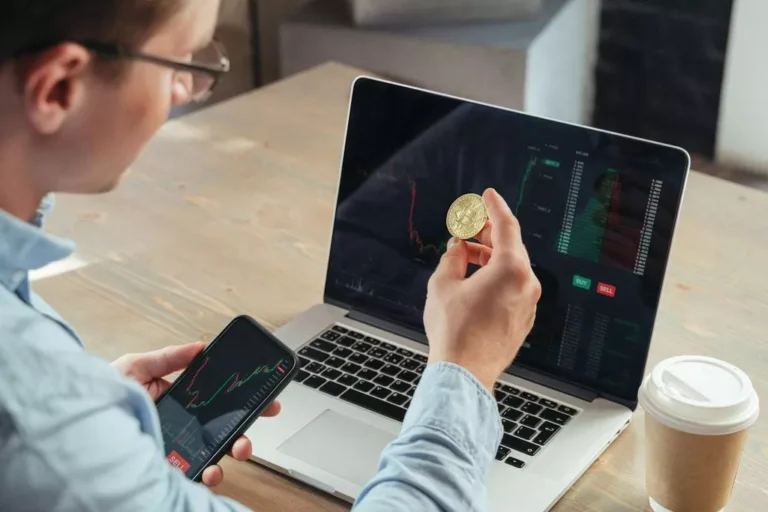
Technical day traders will use autotrading to invest based on technical market signals. These types of orders allow an investor to specify an entry price and build a collar around the trade to institute predetermined profit and loss levels for risk management. Despite its automatic nature, automated trading is not a “set-and-forget” approach. Market conditions change constantly, and a strategy that works well one day may perform poorly the next due to factors like shifts in volatility or economic uncertainty. For instance, if market conditions suddenly become highly volatile, your automated system might need manual adjustments to avoid losses.
We do not endorse or promote any specific investments, and any decisions you make are at your own risk. This website and its content are not responsible for any financial losses or gains you may experience. Please consult with a legal professional to ensure this disclaimer complies with any applicable laws and regulations in your jurisdiction. The other category, manual trading, is a process wherein human decision-making for entering and exiting trades plays a vital role. Automated systems might give traders a false sense of security, leading them to overlook potential risks. The fact that the system has been backtested and has worked well in the past doesn’t guarantee future success.
Algo trading can help to reduce the incidence of mistakes made by humans when placing trades and can identify profit and loss (P&L) opportunities much faster than a human trader. It relies on expensive, complex software and takes place primarily at large investment banks, hedge funds, proprietary trading firms, and regulated cryptocurrency exchanges. Algorithmic trading involves automatically executing trades based on predefined rules and criteria – such as asset price, volume and the differentials between correlated markets. These algorithms use technical analysis and statistical models to make informed trading decisions. For sophisticated traders, algorithmic trading offers powerful advantages in speed, efficiency, and emotionless discipline.
One key advantage of automated trading systems is their ability to handle multiple accounts and different strategies simultaneously. This ability allows traders to diversify their trading, spreading risk across different instruments and strategies, and can help to create a hedge against losing positions. For instance, one system may be dedicated to trend-following, while another may be designed for mean-reversion.

Finally, autotrading systems still need continual monitoring and management even though they can function autonomously. Traders must periodically assess the system’s performance, make sure it follows risk management guidelines, and take appropriate action if necessary to halt prospective losses. In some cases, it may be more administratively burdensome to monitor and oversee processes as opposed to simply entering manual trades. Due to shifting market conditions, strategies that perform extraordinarily well in backtesting may not necessarily produce the same results in actual trading. This is because historical data does not necessarily indicate how financial markets will perform in the future. It’s critical to strike a balance between making tactics more effective and making sure they can still be adjusted to changing market circumstances.
So it makes sense for individual traders to have the absolute best system affordable in order to compete. Anything less can put them at a disadvantage when it comes to buying and selling orders. Open-source algorithms are algorithms where the code and logic are fully accessible, available and modifiable by the public, unlike black-box algorithms. On the investment platform, clients can view their portfolio, its performance, and other details.
Automated, or algorithmic (algo), systems across all asset classes execute pre-set orders that can exclude the influence of human emotion or market swings. This is one advantage of algo trading, as emotional trading can result in overtrading, which in turn can trigger losses. Another benefit of algo trading is that a computer-managed system lets you trade multiple accounts and strategies simultaneously.
In fact, novice traders who are serious about their profession will soon recognize speed can be a key factor in turning a profit. The system in which orders are placed and trades are executed is an essential tool for traders. Some of the easiest to use and most profitable for traders are direct access trading (DAT) systems. Automated trading, also known as algorithmic trading, is a method of executing trades in financial markets using computer programs. These programs are set up to follow specific rules and parameters that are designed to generate profit.
Another difference between automated investing and robo-advisors is human interaction. Automated investing may or may not include this option, depending on the platform and service level. Some robo-advisors are purely algorithm-driven, while hybrid robo-advisors combine algorithms with access to human advisors. Most financial market participants, including crypto, stocks, and forex traders use automated systems, as they provide many benefits.